
Year-Round vs Seasonal Homes in the Lakes Region: Build Considerations
If you're deciding between a four-season home and a three-season camp, here's how the build decisions, costs, and long-term performance actually differ.
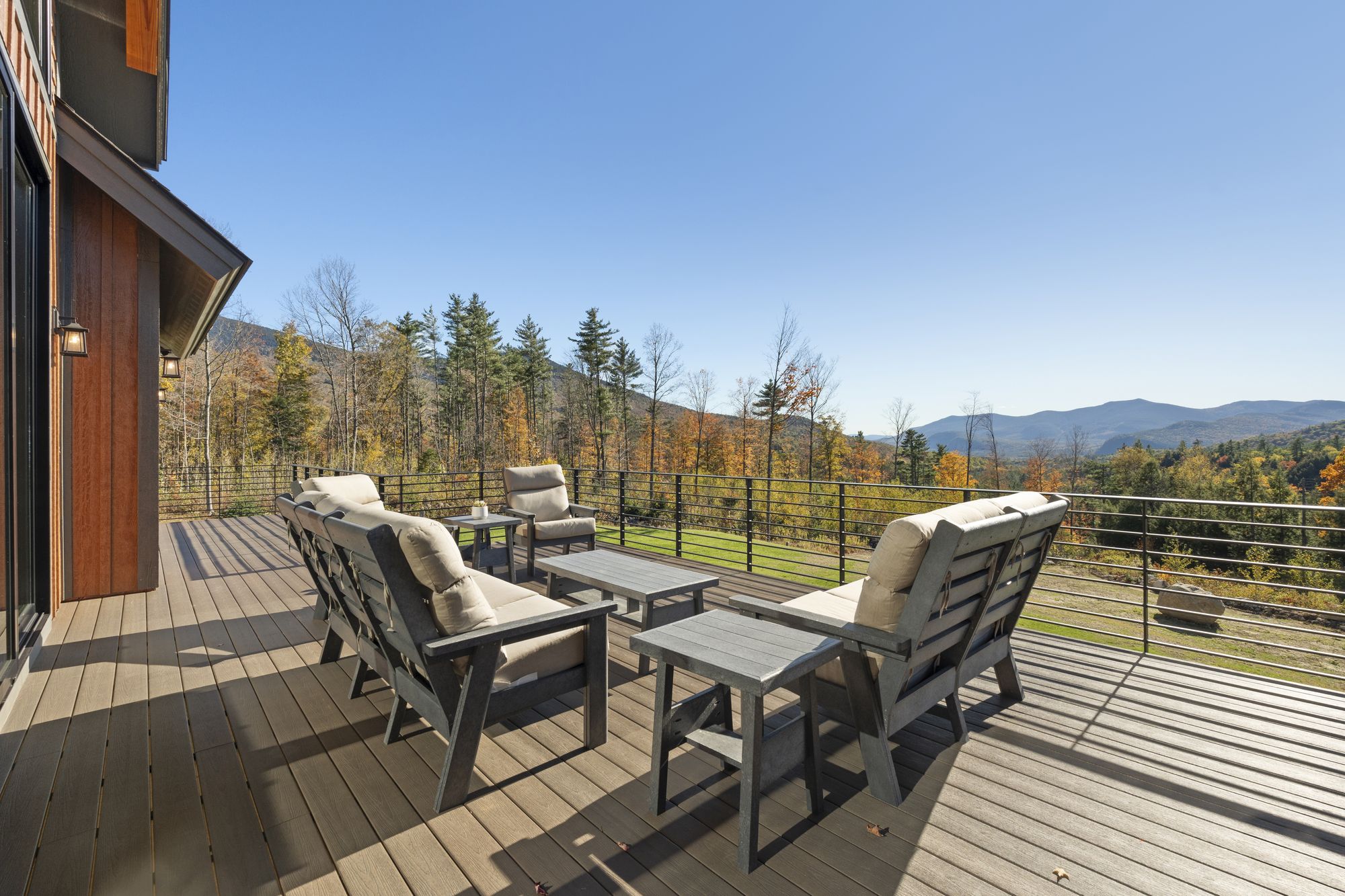
Foundation and insulation
A year-round home in the Lakes Region needs full-depth foundations or frost walls, continuous insulation in the envelope, and a much tighter air seal than a seasonal camp. Cutting corners here shows up immediately in heating bills and ice dams. We typically detail a year-round home with R-30 to R-40 walls, R-60 attics, and continuous exterior insulation that breaks the thermal bridge through the framing. None of that matters as much in a three-season camp, where the systems are drained and the interior follows the outdoor temperature for half the year.
Foundations are the other line in the sand. Slab-on-grade and shallow piers can work for a true seasonal camp, but a year-round home in our climate wants either a frost wall or a full basement. The basement is usually worth the money, it pays for itself in mechanical space, storage, and resale value.
Mechanical systems
Four-season homes need full HVAC, often heat pumps paired with backup heat, and plumbing that won't freeze when the home is unoccupied for a few weeks at a time. Plan for freeze protection on pipe runs, a generator for power outages, and remote monitoring so you know what's happening when you're not there. A seasonal camp can skip most of that, the trade-off is a real October shutdown and a real May startup, every year, with all the inconvenience that implies.
Ventilation also changes. Tight year-round homes need balanced mechanical ventilation (ERV or HRV) to manage indoor air quality and humidity. Seasonal camps breathe through their leaks. That's not a virtue, but it's how they're built, and adding insulation to a leaky camp without adding ventilation is how you create moisture problems.
Windows and doors
A seasonal camp can get away with single-pane windows and minimally insulated doors. A year-round home needs high-performance, double- or triple-pane glass with low-e coatings, warm-edge spacers, and properly flashed openings. The cost difference is real, but so is the comfort difference in January. Cold glass radiates discomfort even when the air temperature in the room is fine, that's why old camp living rooms feel chilly near the windows no matter how hard the heat is running.
Long-term value
Even if you only plan to use a home seasonally, building to year-round standards usually pays back at resale, buyers want flexibility, and Lakes Region buyers increasingly want true four-season homes. The mountains have made winter use a real demand driver, not just a hypothetical one. We've watched seasonal cottages with marginal insulation sit on the market while comparable year-round homes get multiple offers.
There's also a generational angle. A home built for four-season use can hand down through a family without requiring a renovation every 15 years. A camp built for July weekends usually can't.
Hybrid approaches
Not every project has to be one or the other. We've built homes specifically designed for shoulder-season use, November through March they're winterized, but April through October they're fully functional. That can be the right answer for a second home that mostly gets used in the warm months but occasionally hosts Thanksgiving. The key is to design the systems and envelope intentionally for the use pattern, not to default to either extreme.
How to decide
If there's any reasonable chance you'll want to use the home in winter, or sell it to someone who does, build year-round. The incremental cost is meaningful but not huge as a share of the total budget, and the operating cost difference is smaller than people expect once a tight envelope is in place. If you're certain the home is seasonal forever, build a great seasonal home, and don't pay for systems you'll never use.